Apollo vs ZoomInfo in 2026: A Full Operator Verdict
Apollo vs ZoomInfo compared on independent 2026 benchmarks: real pricing, email and phone data accuracy, the new AI agents, and which one to buy.
The apollo vs zoominfo decision is the single most common data question in outbound, and in 2026 it finally has independent numbers behind it instead of two vendor pages contradicting each other. A March 2026 benchmark ran 1,000 identical leads through both platforms on the same day, verified a fifth of them by hand, and published the methodology. That test, plus current pricing pulled this month, is what this verdict is built on.
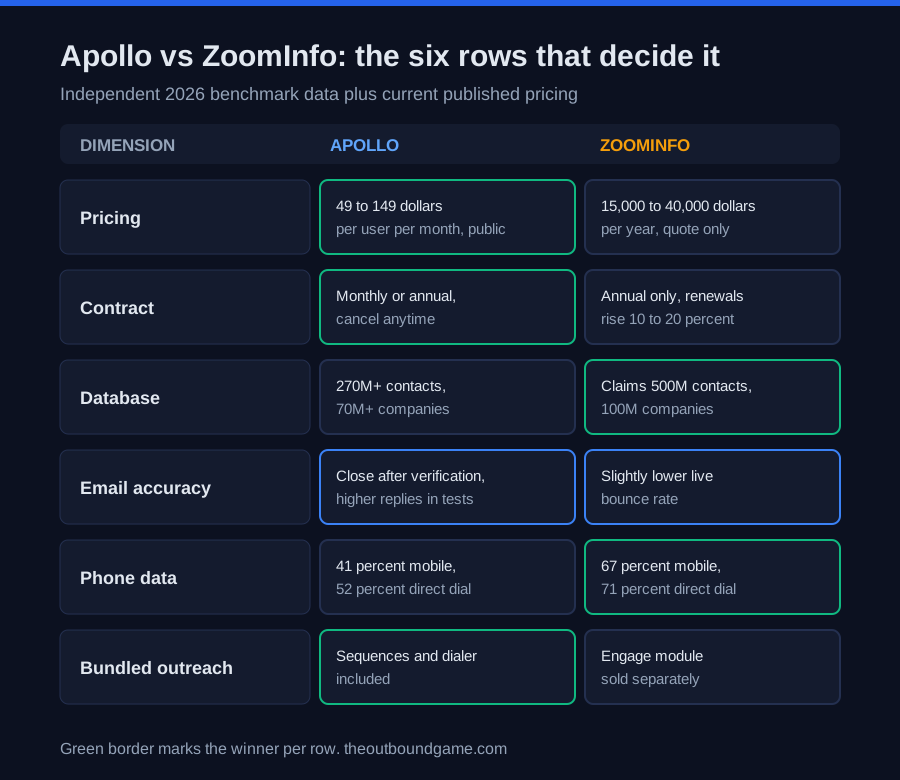
The 30 second version has not changed direction, but the gap has been measured. Apollo is the affordable all in one: a 270 million plus contact database bundled with sequences and a dialer, a real free tier, and public plans that start at 49 dollars per user per month. ZoomInfo is the enterprise depth play: the deepest phone and org chart coverage in the market, proprietary intent signals, and annual contracts that start around 15,000 dollars and commonly land between 25,000 and 40,000. Neither is wrong. They are priced for different companies, and the benchmark shows exactly where each earns its price.
Search zoominfo vs apollo and you will find mostly vendor owned pages arguing about whose b2b data is bigger. Size is the wrong question. The right questions are data accuracy on the day you send, whether your motion is email led or phone led, and what the platform costs at renewal, not at signature. This piece sits inside our data cluster alongside the b2b data providers pillar, our guide to data enrichment tools, and the roundup of sales intelligence tools, and it exists to settle the head to head for anyone running b2b prospecting on a real budget.
What each platform actually is in 2026
Apollo is an all in one sales platform. It bundles a contact database of more than 270 million people and 70 million companies with an email sequencer, a dialer, enrichment, and a light deal layer, so a lean team can prospect, send, and track from one login. The database grows through a contributor network of connected inboxes and CRMs, which is why coverage is strongest in the tech, SaaS, and services segments its user base sells into. The company crossed 150 million dollars in annual recurring revenue in 2025 and now serves roughly 100,000 paying customers, so it is no longer the scrappy underdog it was when this comparison was first written.
ZoomInfo is the incumbent intelligence layer, a public company doing about 1.25 billion dollars in annual revenue. It claims around 500 million contact profiles and over 100 million company records, with 120 million plus direct dial numbers verified by a mix of machine scanning, partner feeds, and an in house research team. Beyond raw records it sells org charts, technographics, intent signals, and a growing set of workflow modules. You buy it through a sales process and procurement, not with a card.
Both vendors spent 2026 bolting an AI layer on top. Apollo now markets an AI research agent and positions itself as an agentic platform that drafts, enriches, and prioritizes inside the workflow. ZoomInfo ships Copilot, which surfaces account signals and recommends actions across its dataset. On the audits we run, both layers are genuinely useful assistants and neither is an autonomous rep, so treat the agent story as a productivity boost on top of the data, not as the reason to pick either side.
The benchmark numbers that settle the data accuracy question
Every earlier version of the apollo vs zoominfo comparison had to hedge on accuracy because the only sources were the vendors themselves. The March 2026 independent benchmark removed the hedge. On 1,000 identical leads queried the same day, ZoomInfo returned a mobile number for 67 percent of records against Apollo at 41 percent, and a direct dial for 71 percent against 52 percent. That is a 26 point mobile gap. On a five rep calling team, it is roughly a hundred extra connectable numbers every single day.
Email tells a friendlier story for Apollo. Its addresses pass verification at competitive rates, and in a separate 450 lead live send test the practical difference collapsed: ZoomInfo bounced 0.8 percent in campaign against Apollo at 1.8 percent, while the Apollo sourced list actually earned the higher reply rate at 5.1 percent versus 4.7. Job titles are a non story, with both vendors above 89 percent accuracy and within three points of each other. The pattern we see is consistent: run either list through a verifier before sending and the email quality gap nearly disappears, but no verifier can conjure the phone numbers Apollo does not have.
So the accuracy verdict is conditional, not absolute. Email led motion: Apollo is good enough once verified. Phone led motion: ZoomInfo’s coverage is a structural advantage that alone can justify its price. All b2b data decays at roughly 22 percent a year as people change jobs, which is why freshness and verification discipline matter more than any headline database size either vendor prints.
Apollo pricing vs ZoomInfo pricing: two different universes
Apollo pricing is public. There is a genuinely useful free tier, then paid plans that run from 49 dollars per user per month at the entry level to 149 at the top, with annual billing discounting roughly 20 percent. Credits meter usage, and heavy enrichment burns them faster than new users expect, but a solo operator or a five person team can be live today for less than the cost of a team lunch, on monthly terms they can cancel.
ZoomInfo does not publish pricing. Entry contracts start near 15,000 dollars a year with seat minimums, verified mid market deals commonly land between 25,000 and 40,000 once intent and engagement modules are added, and the median sits around 32,000. Contracts are annual only with narrow cancellation windows, and renewals frequently carry automatic increases of 10 to 20 percent, so a 25,000 dollar year one deal can quietly become a 36,000 dollar year three deal with no change in usage. The company did launch a free Lite tier in the past year, which is worth grabbing as a supplementary source, but it is a sampler, not a plan you run a team on.
The honest math for a lean team: Apollo covers most of the same ground for 600 to 1,800 dollars per user per year. For an enterprise team where one incremental closed deal pays for the contract, the calculus flips, and the phone data is usually what flips it.
How to decide the apollo vs zoominfo question for your team
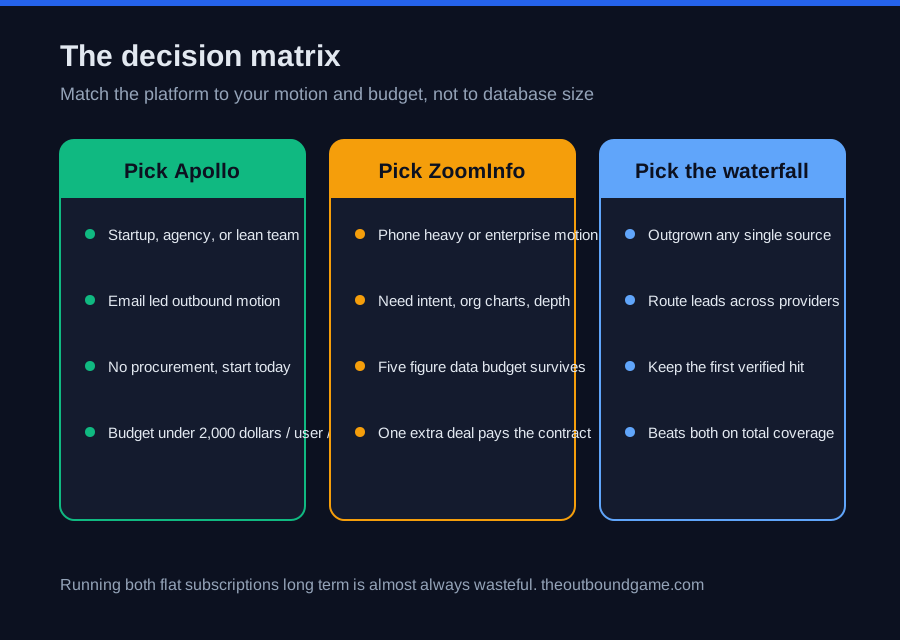
Pick Apollo if you are a startup, agency, solo operator, or lean team, your outreach is email first, and you want to start today without procurement. The bundled sequencer and dialer mean you can go from list to sent without buying two more tools, and the free tier lets you test its coverage of your exact ICP before paying anything. This is most teams reading this page.
Pick ZoomInfo if you run a phone heavy or enterprise motion, you need intent signals, org charts, and depth in narrow industries or senior titles, and the budget survives a five figure annual contract plus escalating renewals. The benchmark phone gap is real and decisive for callers.
Pick the waterfall if you have outgrown the apollo vs zoominfo binary entirely. Routing each lead through multiple providers in sequence, taking the first verified hit, routinely beats either vendor alone on total coverage for a fraction of an enterprise contract. Running both platforms side by side long term is almost always wasteful because the databases overlap on most mainstream records, so a transition period is the only good reason to pay for both.
Five mistakes buyers make in the apollo vs zoominfo comparison
-
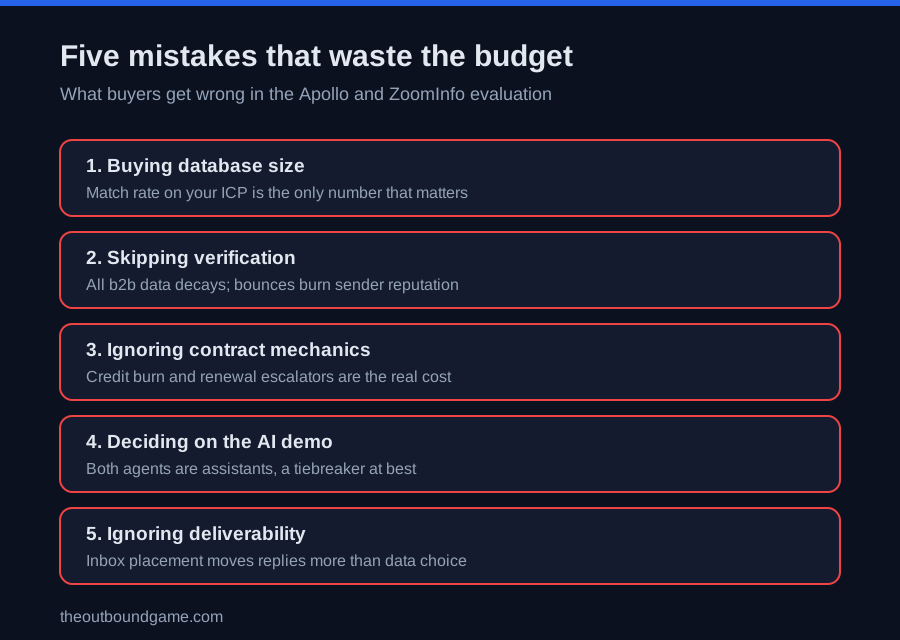
Buying database size instead of match rate on their own ICP. Headline totals are marketing. The only number that matters is how many of your target accounts come back with verified contacts, which you can test free on Apollo and via Lite on ZoomInfo before spending anything.
-
Skipping verification because the vendor claims high accuracy. Both platforms ship some share of stale records, and all b2b data decays continuously. Teams that pipe exports straight into sequences burn sender reputation on bounces that a two minute verification pass would have caught.
-
Ignoring contract mechanics. Apollo credit burn on enrichment and ZoomInfo renewal escalators are where the real cost lives. What we see most often is a team budgeting year one list price and getting surprised in year two.
-
Letting the AI agent demo decide the deal. Both agent layers are assistants that speed up research and drafting. Neither replaces list strategy or a rep, so weight them as a tiebreaker, not the criterion.
-
Optimizing the database while deliverability burns. The gap between the two vendors on email accuracy is a few points after verification. The gap between landing in the inbox and landing in spam is your entire reply rate, and it is decided by authentication, warmup, and sending behavior, as The Inbox Ledger’s deliverability guides lay out in depth.
An eight step framework for choosing your data platform
-
Define the motion first. Email led, phone led, or mixed. This single answer eliminates half the debate before any demo.
-
Write down your ICP in filters. Industries, headcount bands, geographies, titles. You cannot judge coverage without a concrete target list.
-
Pull the same 500 record sample from both. Use Apollo’s free tier and ZoomInfo Lite or a trial. Same filters, same day.
-
Verify the emails and score the phones. Run both exports through a verifier, then check what share of records include a mobile or direct dial. Compare match rates on your list, not the benchmark’s.
-
Price the true annual cost. Apollo at realistic credit consumption, ZoomInfo with the modules you actually asked about, plus a 15 percent renewal assumption. Compare against reviews on G2 for the tier you would buy.
-
Test the workflow, not the features. Build one list, one sequence or one call block, end to end. Friction here is what your reps live with daily.
-
Fix deliverability before the first send. Dedicated sending domain, SPF, DKIM, DMARC, warmed mailboxes, safe volume. Sender reputation decides more of your reply rate than the vendor choice does.
-
Decide, commit for two quarters, and measure replies and meetings. Not opens, not credits used. If coverage of your ICP thins out later, add a second source in a waterfall instead of ripping out the stack.
How this choice fits the broader outbound stack
-
Your data platform is the supply layer of the b2b outbound sales system, and everything downstream inherits its quality.
-
The full landscape of b2b data providers is wider than these two, and niche ICPs often justify a specialist source.
-
Coverage gaps get closed by data enrichment tools, where waterfall routing across sources beats any single vendor.
-
Records become signal inside sales intelligence tools, which is the layer ZoomInfo monetizes hardest.
-
Sequencing and sending live in sales engagement platforms, a category Apollo bundles and ZoomInfo sells as a module.
-
Clean records only stay clean if your CRM automation enforces dedupe and enrichment on entry.
-
AI prioritization layers from our guide to the best AI tools for sales prospecting sit on top of whichever database you pick.
-
The message itself still decides replies, which is where cold email software and copy discipline take over from data.
FAQ
Frequently asked questions
Is Apollo cheaper than ZoomInfo?
Which has better data, Apollo or ZoomInfo?
Is Apollo accurate enough for cold email?
Why is ZoomInfo so expensive?
Does ZoomInfo have a free plan in 2026?
Can I use both Apollo and ZoomInfo together?
Do the new AI agents change the choice?
The bottom line
The apollo vs zoominfo verdict in 2026 is conditional and clear. For the lean, email led teams this site is written for, Apollo wins: the data is good enough once verified, the price fits a real budget, and the bundled workflow means fewer tools to buy. For phone heavy enterprise motions, ZoomInfo earns its premium on a measured 26 point mobile coverage gap and intent depth that Apollo does not match. And for teams past a single source, the waterfall quietly beats them both. Whichever way you go, spend the difference on deliverability, because the inbox, not the database, is where replies are won.
Want more tested breakdowns like this? We publish one honest teardown of outbound tools, tactics, and playbooks each week. Join the newsletter.
More on Data Providers
Apollo vs Cognism in 2026: Which Data Platform to Buy
Apollo vs Cognism compared for 2026: real pricing, EMEA versus US coverage, phone verified mobiles, GDPR posture, and which platform fits your motion.
The Best Data Enrichment Tools in 2026, Compared Fully
The best data enrichment tools in 2026, compared by fit. Apollo, ZoomInfo, Clay, and Cognism on accuracy, waterfall vs single-source, and real pricing.
The Best B2B Data Providers in 2026: An Operator Guide
The best B2B data providers in 2026, compared on accuracy not database size. An operator guide to coverage, compliance, and the real pricing.