B2B Outbound Sales: A 2026 Operator-Grade Playbook
B2B outbound sales in 2026 runs on signal-led targeting, not raw volume. An operator playbook on building pipeline that books meetings and closes deals.
B2B outbound sales is the proactive motion of reaching named accounts before they raise a hand, and in 2026 it looks almost nothing like the volume game most teams still run. The data is blunt about it. Instantly analyzed billions of cold emails and put the platform-wide reply rate at 3.43 percent, while top performers clear 10 percent or more. That gap is not a copy problem. It is a targeting, timing, and infrastructure problem, and it is the entire subject of this playbook.
Most teams treat outbound as an activity quota. Send more, dial more, connect more, and pipeline will follow. It used to, roughly. Reply rates have fallen from around 7 percent two years ago to the 1 to 5 percent band today, decision-makers receive over 100 sales emails a week, and inbox filters at Google and Microsoft have grown far more aggressive. The teams we work with that still grow outbound pipeline in this environment did one thing: they stopped optimizing for volume and started optimizing for relevance at the account level.
This is the pillar reference for everything else we publish on outbound. We will define the motion, lay out the seven-layer operating model, walk the metrics that actually diagnose problems, cover the five mistakes that quietly kill programs, and give you an eight-step build sequence you can run this quarter. Where a topic deserves its own deep dive, like cold email sequences or your best AI sales tools, we link out to it.
What B2B outbound sales actually is in 2026
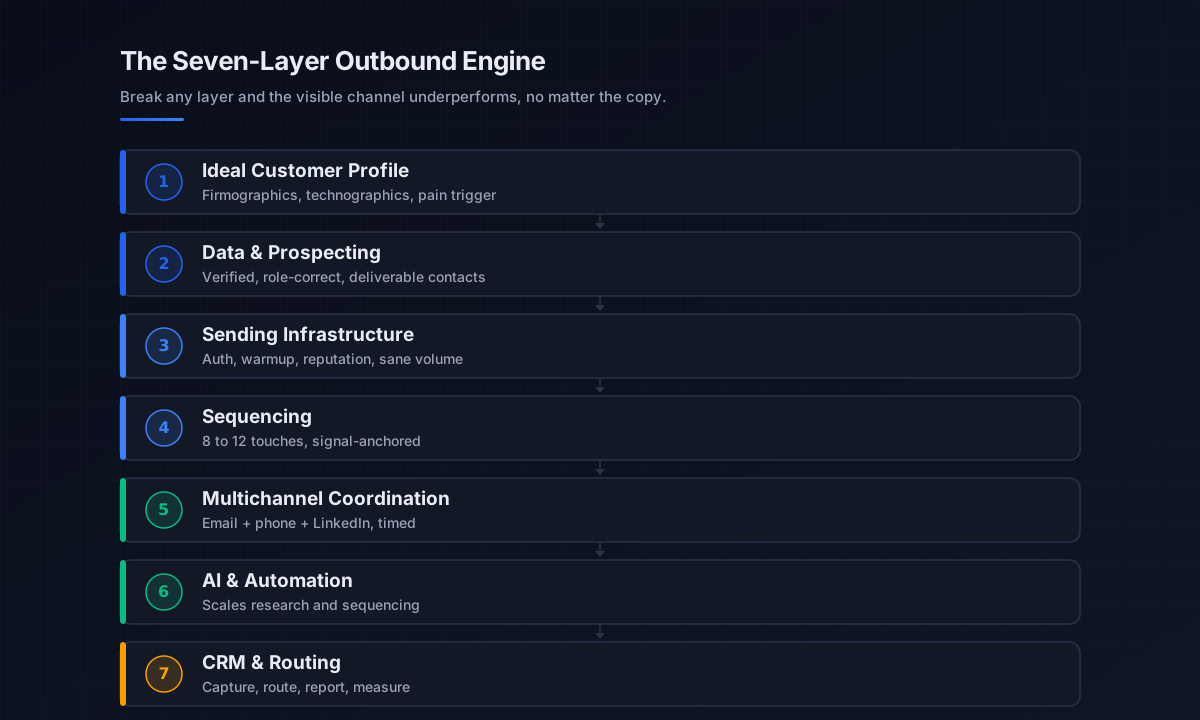
B2B outbound sales is a system, not a channel. People conflate it with cold email or cold calling because those are the visible surface. Underneath sits ICP definition, data sourcing, list hygiene, sending infrastructure, sequencing logic, multichannel coordination, and routing into a CRM. Break any one layer and the visible channel underperforms no matter how good the copy is.
The distinction from inbound matters because it changes who controls the timing. With inbound, the buyer decides when to engage, usually late. Gartner research shows B2B buyers are around 70 percent through their evaluation before they talk to a rep. Outbound is the only motion that lets you enter the account earlier than that, on your timing, with a message built around a specific trigger. That early entry is the strategic point of the whole exercise, and it is why outbound still drives a large share of B2B pipeline even as individual channel metrics compress.
The volume era is over
For fifteen years the open rate was the headline metric. It is now actively misleading. Apple Mail Privacy Protection auto-loads tracking pixels for roughly half of all inbox traffic, so reported open rates of 60 to 70 percent tell you nothing about real engagement. The metric that survived is reply rate, because a reply means a human read the message and decided it warranted an answer. Build your reporting around reply rate and positive reply rate, and quietly retire opens.
Signal-led beats spray-and-pray
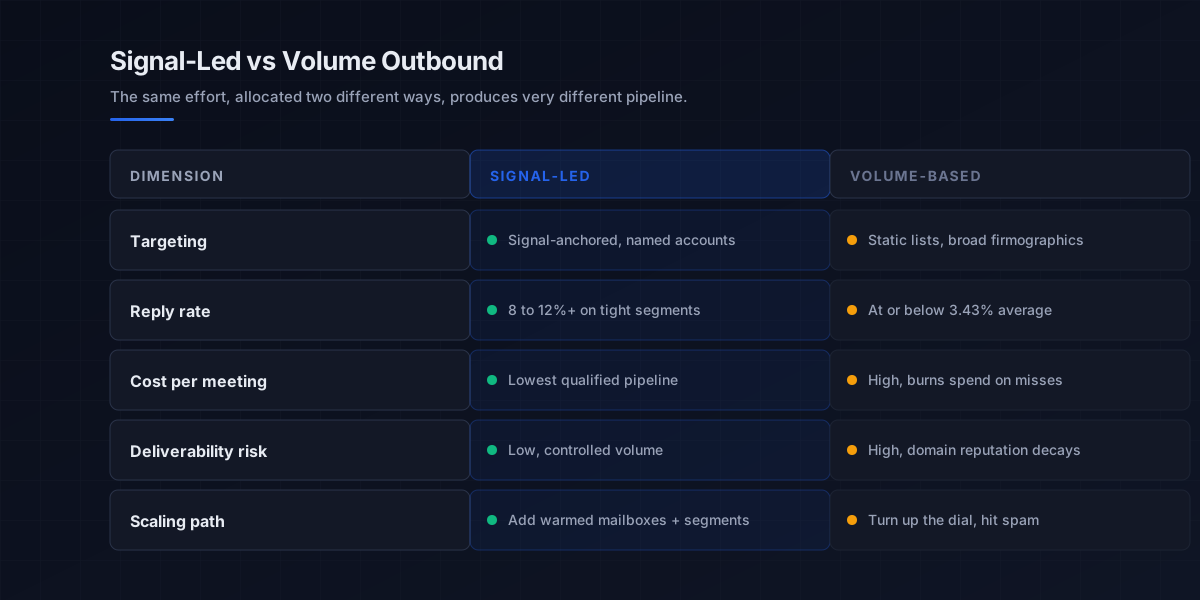
The single biggest shift is from static lists to signal-anchored outreach. Signal-triggered messages, which fire on events like hiring, funding, leadership changes, or product launches, convert at roughly three to five times the rate of static list-based campaigns. Five minutes of account research before sending lifts reply rates three to five times over template blasts. This is not a tactic. It is the organizing principle of modern outbound sales strategy, and everything downstream depends on getting it right.
The seven-layer outbound operating model
On the audits we run, underperforming programs almost never have a single broken thing. They have a weak layer that drags the rest down. Treating outbound as seven stacked layers makes the diagnosis fast.
Layer 1: Ideal customer profile
Everything starts with who. A tight ICP defined by firmographics, technographics, and a real pain trigger beats a broad one every time. Campaigns under 50 recipients average a 5.8 percent reply rate against the volume blasts that sit at or below the 3.43 percent average. Narrow on purpose. You can always expand a working segment, but you cannot rescue a campaign built on a vague one.
Layer 2: Data and prospecting
Once you know who, you need accurate contact data at the named-account level. This is where tools like Apollo and the broader data and prospecting tools category earn their cost. The metric that matters is not list size, it is the percentage of records that are deliverable and role-correct. Verify before you load. A list with a 15 percent bounce rate will quietly burn the sending domain it touches.
Layer 3: Sending infrastructure
This is the layer most articles on this topic miss entirely. Your sequence can be perfect and still land in spam if the infrastructure underneath is weak. Domain authentication, warmed sending accounts, sane per-mailbox volume, and clean reputation are prerequisites, not optional polish. We keep the deep technical material on our sister publication, so for email deliverability and SPF, DKIM, and DMARC setup read those guides, then come back. The short version: if reply rate is below 2 percent, the problem is almost always targeting or deliverability, not the words.
Layer 4: Sequencing
A sequence is the orchestrated set of touches across time. The data is clear that follow-ups matter: 58 percent of replies come from the first email, but the remaining 42 percent come from follow-ups, and around 80 percent of deals require five or more touches while 44 percent of reps give up after one. Plan 8 to 12 touchpoints per prospect and treat each one as a reason to engage, not a guilt trip. The full mechanics live in our cold email sequences guide.
Layer 5: Multichannel coordination
Email alone is leaving pipeline on the table. Multichannel outreach that combines email, phone, and LinkedIn generates around 40 percent higher engagement than single-channel approaches. The art is coordination, not just adding channels. A LinkedIn view before an email, a call after a non-reply, each touch aware of the others. Well-run multichannel outreach also spreads risk: when one channel degrades, the sequence still has surface area. We cover the channel tradeoffs in cold email versus LinkedIn and the social side in our LinkedIn Sales Navigator.
Layer 6: AI and automation
AI now handles roughly 80 percent of the research and sequencing work for elite teams, which frees humans for positioning and high-value conversations. This is where the AI SDR category sits. Used well, it scales the research step that drives reply rates. Used badly, it scales generic volume faster, which is worse than doing nothing.
Layer 7: CRM and routing
The last layer captures the outcome. Replies have to route to the right rep, get logged, and feed reporting. Reps spend only about 28 percent of their time actually selling, with the rest lost to admin and CRM updates, so the routing layer is where you reclaim selling hours. A clean outbound sales process and the right best AI SDR tools decide whether your activity becomes measurable pipeline or disappears.
Outbound versus inbound, and when to build which
Founders ask which to build first far more than they ask how. The honest answer depends on brand awareness and deal complexity, and most articles miss that it is not an either-or. Inbound works when buyers already know the category and are searching for a solution. If you are an unknown brand or a new category, those searches do not exist yet, so waiting for inbound is waiting for revenue that will not arrive. Outbound is the only motion that manufactures demand on your timeline rather than harvesting demand someone else created.
The practical rule we give the teams we work with: if your brand has low awareness and your ACV justifies a human touch, build outbound first. It produces pipeline in weeks, validates messaging against real buyers, and surfaces the exact objections your eventual inbound content needs to answer. Inbound then compounds on top of an outbound foundation, because the prospects who saw your outbound recognize the name when your content shows up in search. The two motions are not rivals. Outbound is the forcing function that makes inbound work faster.
Deal complexity is the second axis. Simple, low-ACV products with high search volume can lean inbound and self-serve. Complex products with buying committees of six to ten decision-makers and long evaluation cycles need outbound to enter the account early and stay present through the committee process. The more stakeholders and the longer the cycle, the more outbound earns its keep, because it is the only channel that lets you place a coordinated message in front of multiple committee members at once rather than waiting for one of them to find you.
The metrics that actually diagnose outbound
Vanity metrics hide problems. The diagnostic set is short. Reply rate tells you whether the message and targeting connect. Positive reply rate, the share of replies that are genuinely interested rather than removal requests, tells you whether you are reaching the right people. A 10 percent reply rate where half are “please remove me” is worse than a 6 percent rate where 80 percent express interest. Meeting booked rate, which most published benchmarks skip, sits between 0.5 and 2.5 percent for cold campaigns and is the real bridge to pipeline.
Cost per meeting is the metric founders should care about most. Cold email runs roughly 306 emails per qualified lead, which sounds brutal until you compare cost per lead against the 100 to 500 dollars common in B2B paid channels. Outbound, run on a tight ICP, is usually the cheapest qualified pipeline a B2B company can build. That economic reality is why it survives every prediction of its death.
The mistake we see in reporting is averaging across segments. A blended reply rate hides a segment doing 9 percent and one doing 1 percent, and the blended number tells you to do nothing. Report per segment, per sequence, per sender. Granular reporting is what lets you cut the dead 1 percent segment and pour budget into the 9 percent one. That single discipline does more for b2b lead generation economics than any copy tweak, because it reallocates spend toward the accounts that actually convert.
There is also a leading-indicator set worth watching weekly: bounce rate, spam complaint rate, and inbox placement. These predict reply-rate collapse before it shows up in pipeline. If bounce rate climbs, your data went stale. If complaint rate climbs, your targeting drifted off-ICP. Catch both at the indicator stage and you never see the lagging damage. We keep the deep monitoring playbook on the sister site under spam complaint rate.
Building outbound capacity without overhiring
The reflex when outbound works is to hire more SDRs. On the audits we run, that is usually the wrong first move. Reps spend only about 28 percent of their time selling, so adding headcount without fixing the other 72 percent just buys more admin. The higher-leverage move is to automate the research and data steps that eat that time, then let each rep run more accounts at the same quality bar.
Capacity math is simple once you frame it by mailbox and account, not by person. A sane per-mailbox volume protects deliverability, so scaling sends means adding warmed mailboxes, not just turning up the dial on existing ones. A single SDR coordinating a multichannel sequence across a tight segment can carry far more pipeline than a room of reps blasting generic volume, because the constraint is research quality and infrastructure, not human send capacity. Solve the constraint, then hire against proven unit economics rather than hope.
This is also where AI changes the hiring curve. With AI agents handling roughly 80 percent of research and sequencing for elite teams, the role of the human shifts from data entry to judgment: positioning, objection handling, and the high-value conversations a machine cannot have. Build the automated layer first, prove the cost per meeting, and only then add humans where their judgment compounds.
Five mistakes that quietly kill outbound programs
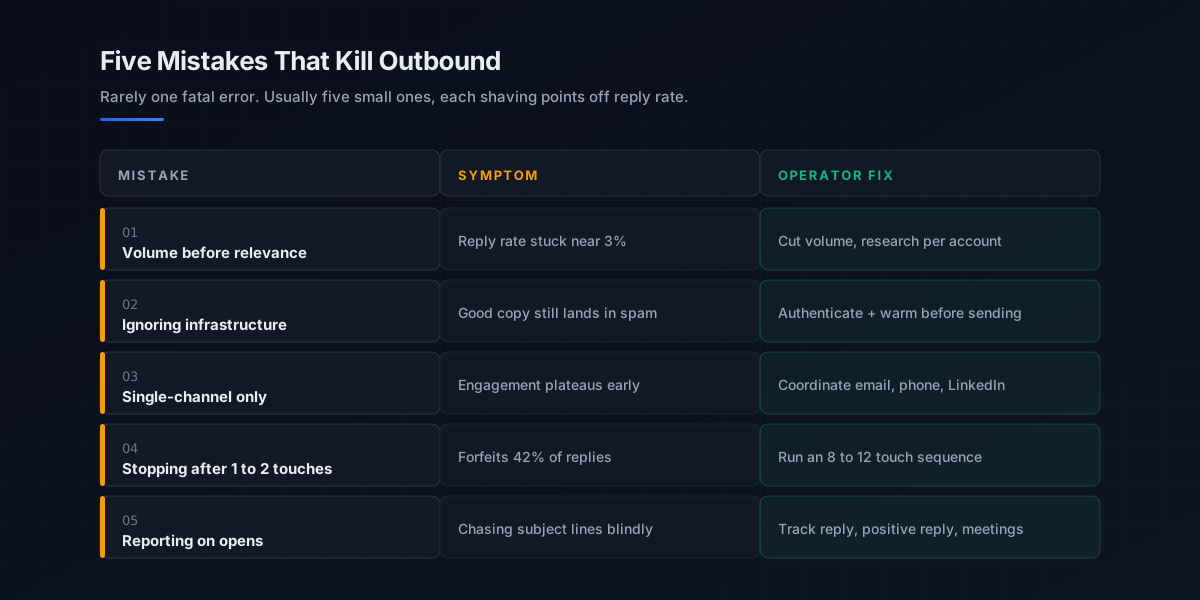
What we see most often is not one catastrophic error. It is five common ones, each shaving points off reply rate until the whole program looks broken.
-
Optimizing volume before relevance. Teams that spray 500 generic emails a day land at or below average. Teams sending 50 to 100 account-specific emails clear 8 to 12 percent. The fix is to cut volume and add research per account.
-
Ignoring the infrastructure layer. Sending from an unauthenticated or cold domain caps reply rate no matter how good the copy is. The fix is to treat sender reputation and warmup as prerequisites, not afterthoughts.
-
Single-channel dependence. Email-only programs leave the 40 percent engagement lift from multichannel on the table. The fix is coordinated email, phone, and LinkedIn touches built into one sequence.
-
Giving up after one or two touches. With 80 percent of deals needing five or more touches, stopping early forfeits 42 percent of available replies. The fix is an 8 to 12 touch sequence with genuine value in each step.
-
Reporting on opens. Optimizing toward an MPP-inflated open rate sends teams chasing subject lines while the real problem sits in targeting or deliverability. The fix is to report reply rate, positive reply rate, and meetings, and to drop opens entirely.
The eight-step build sequence
This is the order we build an outbound motion in, whether for our own products or the teams we work with. Run it top to bottom.
- Define one tight ICP. Firmographics, technographics, and a specific pain trigger. Resist the urge to widen it.
- Source and verify data. Pull contacts for that ICP, then verify deliverability before anything loads into a sender.
- Stand up clean infrastructure. Authenticate domains, warm sending accounts, set sane per-mailbox limits. Do not send a single campaign before this is green.
- Write a signal-anchored sequence. Build 8 to 12 touches, each tied to a real trigger or value point, not a check-in.
- Add a second channel. Layer LinkedIn and phone touches into the email sequence with deliberate timing.
- Instrument the metrics. Wire reply rate, positive reply rate, and meeting booked rate into reporting from day one.
- Launch small and read the data. Start under 50 recipients per segment, read reply and positive reply rates, and fix the weakest layer before scaling.
- Scale the winners only. Expand the segments and sequences that clear your reply-rate bar. Kill the rest without sentiment.
How outbound sales fits the broader stack
Outbound is one engine inside a larger revenue system. Each layer below has its own deep dive, and the pillar links them together so the cluster compounds.
- Strategy and planning. Quotas, segments, and capacity. See outbound sales strategy.
- Data and prospecting. Sourcing and verifying named-account contacts. See best AI sales tools.
- Sending infrastructure. Authentication, warmup, and reputation, covered on email deliverability.
- Cold email tactics. Copy, structure, and cadence in cold email sequences.
- LinkedIn and social. Channel choice in cold email versus LinkedIn and depth in the LinkedIn Sales Navigator.
- AI in outbound. Research and sequencing scale via AI SDR platforms.
- Operations and process. The repeatable motion in outbound sales process.
- Tooling. The full sales tech stack in our best AI sales tools and best AI SDR tools breakdowns.
That is the whole map. Outbound generates the conversations, deliverability gets them seen, sequencing and multichannel turn them into meetings, and the CRM turns meetings into measurable pipeline.
Frequently asked questions
What is B2B outbound sales?
Is B2B outbound sales still effective in 2026?
What is a good cold email reply rate?
How many touches does a B2B outbound sequence need?
Should outbound be email, LinkedIn, or phone?
Why is my outbound reply rate below 2 percent?
What metrics matter most in outbound sales?
The bottom line
B2B outbound sales in 2026 rewards precision and punishes volume. The teams winning pipeline are not sending more, they are sending to tighter lists, from cleaner infrastructure, with messages built around real signals, across coordinated channels. The seven-layer model tells you where to look when a program stalls, the metrics tell you which layer is broken, and the eight-step sequence tells you what order to build in. Start narrow, fix the weakest layer first, and scale only what clears your reply-rate bar.
If you take one thing from this pillar: outbound is an infrastructure and targeting discipline that happens to use channels, not a channel that happens to need infrastructure. Get the order right and the channel metrics follow.
Get the operator playbook in your inbox. The Outbound Game publishes one operator-grade breakdown a week on B2B outbound sales, tactics, tooling, and ops. No fluff, no vendor talking points. Subscribe and get the next one when it ships.
More on Outbound Strategy
Cold Email vs LinkedIn Outreach: Which Wins in 2026?
Cold email vs LinkedIn outreach in 2026: the reply rate and cost data, the volume caps, when each channel wins, and the combined sequence that beats both.
How to Start Outbound Sales in 2026 (60 Day Roadmap)
How to start outbound sales from zero in 2026: the 60 day roadmap from ICP to first meetings, the starter stack, and the metrics that prove the channel.
LinkedIn Connection Request Message: What Works in 2026
LinkedIn connection request message guide for 2026: the note paradox, the 120 to 180 character sweet spot, and the acceptance rate math that gates volume.